ray-garcia
Latest posts from Ray García y sus cosas de cada día
-
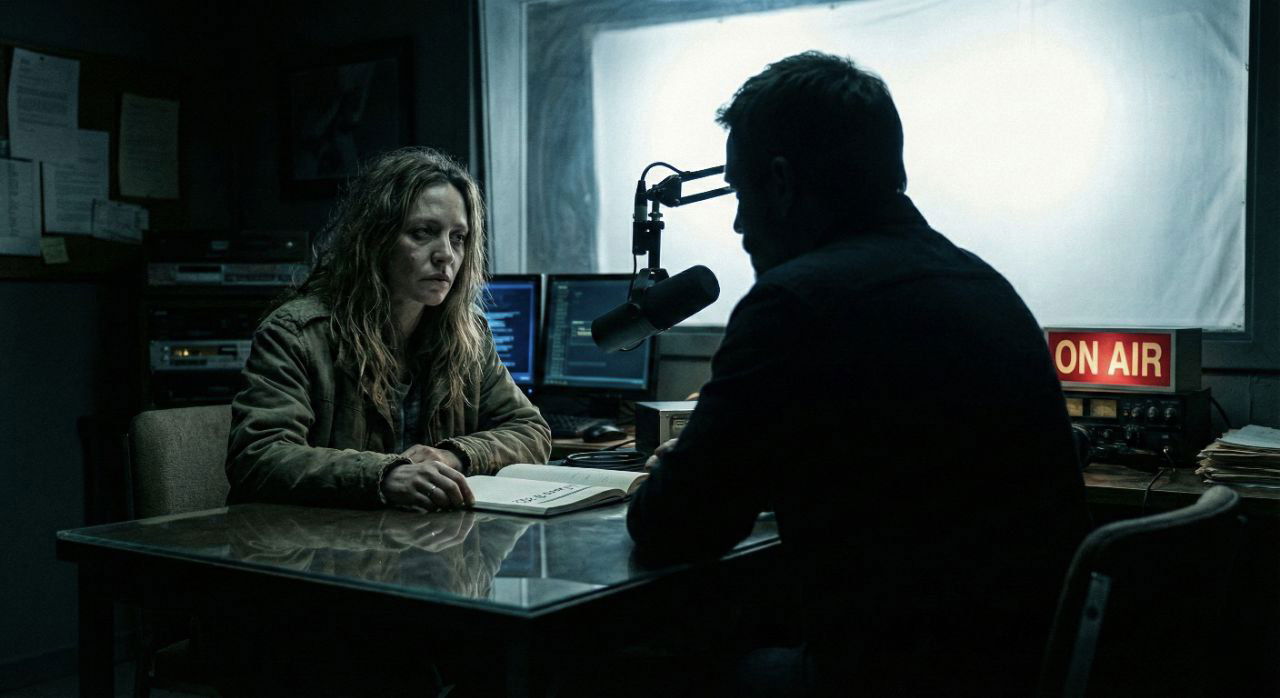
Beyond the Veil
Dec 09 ⎯ My name is Amelia Haart, and I'm fortunate enough to know how to identify a good story the moment I see one. It's something I detect quickly—those small details that, when I see them together, set off all my alarms. Some call it a gift, talent, or knack. Some compare it to the musician who composes a song that stands out from the rest in an oversaturated market, or the filmmaker who manages to maintain the rhythm and captivate the viewer. An art, some say. A gift, say others. I'm one of those who believe that gifts, talents, and knacks are achieved through dedication—gradually honing your analytical capacity until you know how to decide which path will give you the best return. Work, dedication, practice, and perhaps yes, a little intuition. Therefore, what I have isn't talent; it's simply technique. Many hours behind me learning to separate the wheat from the chaff. Be that as it may, I've managed to find many good stories throughout my career. Some of them have derailed the plans of enormous companies with few scruples and much power. Others have brought down more than one politician dirty up to their eyeballs. I suppose you know what I'm talking about. Those stories have led me to be considered an incisive, objective, and independent journalist. I've only tried to be empathetic with each situation I've had to cover. I've allowed myself to be amazed and haven't let prejudices cloud my analytical capacity. And starting from there, I've told what needed to be told, getting as involved as possible with each story, taking them on as if they were my own, connecting dots and making people uncomfortable, generating, in turn, a large number of enemies. Perhaps too many. Because one thing I haven't told you is that you can have a gift, a talent, a knack, be hardworking, perceptive, useful. You can be many things—it doesn't matter what you call it—but there are very big enemies, giants that, believe it or not, are impossible to fight, no matter how skilled you consider yourself. They are those Goliaths that not even ten Davids could defeat, even with every advantage in the world. Those so deeply embedded within the system that their roots, their tentacles, or whatever metaphor you prefer, reach much further than you can imagine. I came across one of those. I found a story that didn't just scratch the surface of the reality we're living in. The story dug so deep that I reached a place they did not want me to visit. First, the newspaper let me go, offering no explanation beyond a sudden personnel adjustment. That didn't stop me—I didn't stop working on it. I knew what I had was something big. I thought that once finished, I would find another place to tell it. And if I couldn't find one, I'd publish it on my own. I wouldn't lack the means. Then came the personal threats. First to me, then to my friends and family. That's when I understood that perhaps I should stop, but stubborn as I am, I didn't. Despite the risk, I finished my investigation. I couldn't find a single media outlet willing to publish it. Some were very obvious in their excuses—they didn't want to piss off certain people. Others, smaller and also more empathetic, confessed that the main advertisers they had would stop providing the economic injection that sustains their outlet if they published it. They had even received veiled instructions to that effect. Basically, I became persona non grata in the world of journalism. A pariah, someone diseased that nobody wanted to approach, fearing the consequences of that association. In an act of rebellion and in an increasingly precarious economic situation, stubborn as I am, I decided to set up a website and tell my story there. They weren't simple enough just to shut down the website, though I know they could have done it with almost a snap of their fingers. The tentacles were very long, the roots very deep. Instead, they managed to silence me while gradually introducing into my profession the idea that I was nothing more than a nutcase, a deviant with a need for attention and absurd conspiracy theories. And that is how they managed, in a process of no more than two years, to end my career, my economy, my marriage, and—why not say it—my health as well. I was one David. They were a hundred Goliaths. Surprisingly, when I thought all was lost, someone became interested in me because of the notoriety I had accumulated during those two years. My investigations, added to the fact that they labeled me crazy or a conspiracy theorist, caught the attention of the outlet I now work for: The Lobster, a news web portal full of theories ranging from those that talk about alternative governments pulling strings from the shadows—something I had experienced firsthand and didn't doubt—to those claiming we'd already had contact with extraterrestrials living among us. The filter, let's say it gently, was lax. They didn't offer much, but they allowed me to work as a journalist and, in addition, I'd receive enough salary to pay rent and eat. A pittance that meant the world to me. Accepting was a professional necessity and an act of personal desperation. The Lobster was the ideal place for the average conspiracy theorist, but the truth is it had a certain following, and both the website and the daily live streams broadcast on the internet had quite an audience. I didn't know if it was more for having a laugh or because people actually believed everything we broadcast. I think it was a mix of both, but the fact is it worked and kept enough subscribers to hire me for minimum wage plus a performance-based bonus. My responsibility within The Lobster was to direct and present one of the online live streams the channel would begin broadcasting on Thursday nights. It was called Revelations. The format was simple: open lines to listen to the most incredible, outlandish, disconnected, and absurd stories viewers told, while trying—yes—to apply my maxim: don't make value judgments, don't prejudge, listen attentively, empathize. It wasn't my dream job—sometimes I could even sense certain rigging in some of the calls or interviews I did. I never knew for certain. Regardless of the above, I tried to incorporate what I had learned throughout my career, despite the fact that what was being told to me bordered on the ridiculous. For me and the little integrity I had left, it was very important to do my work the only way I knew how: with rigor and respect. Although it wasn't the most common thing, sometimes we were lucky enough to interview a guest in person. We did so following our greatest premise: guaranteeing their privacy. To do this, we prepared the studio with the appropriate backlighting and modulated the guest's voice so they could hide their identity. These interviewees sometimes interacted with calls from the audience or with messages that came to us through the streaming chat, previously moderated, of course—otherwise, the humiliation would surface. That has been my life for the last year. The truth is that sometimes, among a tangle of absurd stories, one slipped through that was interesting enough to delve deeper into, catching my attention and activating the sensor that kicks in when small details stand out. Today I have a show. The Interview After arriving at the studio, I took my seat and began my routine. I took out my notepad, noting the date on a clean page, as I always did: February seventeenth, 2033. New day, new page. A tidy notebook reflected my meticulous nature and constant effort to maintain control. Finally, I adjusted my microphone, turned on the laptop, and when the on-air light came on, I began my presentation while turning my ring around my finger. Some people need a pen while they talk, some need to press their hands together, touching only the fingertips, like a middle-class politician. I needed my ring. "Good evening, and welcome, once again this Thursday, to Revelations. The space where you are the protagonist." “My name is Amelia Haart, and I'm here to listen to your story. We all have something to tell. I'm convinced you do, too. If you have lived an extraordinary experience, something unusual, or something you never dared to tell because of the consequences it might have, this is your place.” "This program was born precisely to give voice to all these stories. You have nothing to worry about—we won't judge you here. We will listen attentively and rigorously, and with the support of our experts, we will try to help you find an explanation, if one exists.” "We'll do so, as you know, on two great and solid pillars: respect and privacy. We, mere hosts, can only provide the perfect stage so you can feel free enough to be honest with all our viewers. You provide the rest. Because there are many stories, but only a few extraordinary ones. And I'm sure yours is in this second category.” "Once you have eliminated the impossible, whatever remains, however improbable, must be the truth. Revelations begins." The intro wasn't improvised. I had repeated it many times, but I felt it worked as well as the first day. I thought these first words gave the program a patina of sincerity and seriousness, despite whatever topic was being addressed. Nevertheless, I couldn't help being very analytical and sometimes critical of the stories we received. Call it a professional defect. Some caught my attention, and then I directed the program to delve deeper into them. Others were simply absurd, and I decided to cut them short and steer the show in other directions. Always with respect, even though I sometimes felt they might be pulling my leg. Even though I sometimes felt it was all a crude hoax, a setup by the channel to capture audience. This flexibility I had, not forcing myself with rigid structures that most applied, had helped the program generate interest above the rest of The Lobster's broadcasts. "From this moment, the lines are open. Our team will receive your calls and messages through the stream chat and our social media accounts. As you know, we cannot address all your stories. Only some will make it onto the program so they can be heard and, whenever we can, we will shed some light to help us all understand. "Today, in addition, we have a guest who will dazzle us with their experiences in our 'Live Confessions' section. You know, if you want to come to the show and tell us your story live, contact us." The truth is that few people had the courage to come to the studio, and when they did, they usually did not pass an initial screening. Also, when the investigation team found an interesting story and we contacted the protagonist to invite them to the show, they rarely agreed to collaborate. We were not exactly well regarded. We had been accused on countless occasions of spreading hoaxes, inventing stories, or generating unnecessary panic. Despite attempting to make a serious and respectful program, we were considered a bunch of manipulators and conspiracy theorists with some visibility and perhaps too much free time. "We'll begin with the first call. Good evening." "Hello, good evening." "Welcome to Revelations. We want to hear your story." "Well, you see... it will sound ridiculous, but I..." "Nothing is ridiculous, dear friend. Don't worry and feel at home. We're listening attentively." It wasn't the first nor would it be the last person for whom verbalizing their experience was quite a challenge. They were not used to doing it. They were not used to having someone on the other side genuinely interested in what had happened to them. "I... You see... I hear a voice. One that does not exist." "A voice?" "Yes, that's right. The voice isn't always with me, but sometimes I hear it. It talks to me. It tells me things." "Let us try to understand the situation." "Of... of course." "This voice—where does it come from? Does it originate inside you?" "I hear it, like having someone beside me even when I'm alone. It's terrifying." "You don't have to be afraid. We're here to help. Tell me something—does this voice respond to your questions? Have you been able to converse with it?" "No... I haven't tried. Every time I hear it, it terrifies me, it freezes me." "Dear friend, your reaction is understandable. Doctor?" Doctor Feinmann had been collaborating with us since Revelations began, and his point of view greatly helped reinforce the rigorous approach I had always fought to maintain. "Hello, friend, I'm Doctor Feinmann." "How are you, Doctor? Pleased to meet you." "Very well, thank you. I have a question: are you familiar with the principle of Occam's razor?" "I have heard of it, though I am not entirely sure I can explain it." "The principle says that, all things being equal, the simplest explanation is usually the most plausible." The doctor's diction was excellent. He tried to maintain a slow tempo while enunciating precisely. His tone conveyed wisdom and calm. He was a good professional. "There are countless registered cases of people with your same symptoms. The vast majority of them speak of auditory hallucinations. These can stem from a wide range of different origins, all of them psychological. From here and with the information I have, I cannot diagnose—it would be imprudent on my part—but I wouldn't be wrong if I told you that the first thing you should do is consult a specialist and tell them, naturally, what's happening to you. What I can venture is that, as I say, it's very likely that its origin is psychological. It's much more common than you imagine. You're not crazy, nor should you consider yourself strange because of it. Normalize the situation, talk to a specialist who will surely help you find the root of the problem and, with luck, will manage to silence those uncomfortable voices. It won't be an instantaneous process, so you'll need patience." "I understand, Doctor." "Dear friend," I said, "do the doctor's explanations help you?" "Absolutely. I was afraid to talk about it, but knowing the problem is more common than I thought will help me normalize it. Tomorrow I will look for a professional. Thank you so much for your help—I listen to you every Thursday." "That's what we're here for. Hopefully it gets resolved, and thank you for always listening," I said before hanging up. A couple more calls came in, not very relevant, before moving on to the "Live Confessions" section. The guest had already positioned himself in the studio. The backlighting drew only a silhouette, preventing recognition. "Good evening and welcome," I greeted him, unable to distinguish his face despite him being a couple of meters away. "Hello, good evening." His voice sounded very deep, intentionally distorted. "I must tell you I don't have much time." "Are you in a hurry? You are the one who offered to tell us your story." "Believe me, if I could, I would spend hours talking with you, but soon they will know where I am." "Is your safety at risk for coming here?" "Yes." "In that case, you should contact the authorities first, don't you think?" "They wouldn't believe me. Besides, what could they do? They're as much the victims as you and I." "There are ways to tell your story without revealing your location. A phone call, for example." "But it wouldn't work that way—I know because I've tried it before. I must be here. I must tell you in person." "What must you tell me in person?" I said, glancing sideways as I underlined the date in my notebook: February seventeenth, 2033. I was not particularly receptive. "What would happen if I told you I can prove that everything that happens repeats, over and over, always in the same way?" "Excuse me?" I looked away from the notebook, giving him my full attention again. It was not the intrigue around him—it was the firmness of his words. He was completely sure of what he was saying; he did not hesitate, his voice did not tremble. "That everything repeats." "Do you mean we have had this conversation before?" "Let's say this isn't my first attempt." "But I don't remember any conversation. Obviously, how could I recall something that hasn't happened?" "It doesn't work that way." "And how does it work then? How is it that everything repeats and at the same time this is the first time we are having this conversation? It doesn't seem to make much sense, does it?" "You cannot remember what happens after each reset. I can." "What does that have to do with it?" I said, writing "Remembers" and underlining it. "A lot. That you don't know this isn't the first time we've talked does not mean it hasn't happened. You, like everyone else, are trapped here, repeating the same thing over and over without realizing it. I'm not." "You are not trapped?" "Of course I am, but I'm aware of everything that has happened in previous cycles. And because I'm aware, I can decide what to do. Like now, sitting with you. This is the first time this has happened, because I've decided it should be so. It's not what you or I are supposed to be doing at this moment." "What should I be doing right this instant?" "Continuing to take calls. None interesting enough, I assure you." "You can assure me?" "I've watched your show." "This show? Today's?" "Yes. On several occasions." "Let me recap, if you don't mind." I was unsure if I understood what he was telling me. "According to you, everything that happens here repeats identically." "Every day. Every twenty-four hours exactly," he specified. "It repeats identically every twenty-four hours," I repeated. "Each and every one of us here does the same thing each time without being aware of it. As if ultimately, when we return to the beginning, everything is erased." "That is correct." "Except you." "As far as I know." "Why not you?" "I'm not sure. One day everything changed. First, it was a feeling of déjà vu. Suddenly, I knew what was going to happen, as if I had lived it before. Then the day repeated. And it repeated again. It didn't take many dawns to understand what was happening to me." I wrote "déjà vu" next to an arrow pointing toward "Repetition." "And why are you telling me this?" "I want to wake you up." "Wake me up?" "Make you aware. Make you remember. Like me." "To what end?" "You are very intelligent and perceptive. You are wasted here. You are worth much more. Your track record backs you up. You would be a great ally in my mission." "Your mission?" I couldn't help but write "Me" in my notepad. I agreed with what he said. I felt wasted in this quagmire that was The Lobster. Like a fish out of water. But this was it or nothing. "Getting out of here. Escaping this repetitive reality." "And how do you intend to wake me up?" "By demonstrating with facts that what I say is true. That's why it was necessary for me to be here in person, despite the risk." "So far you are not succeeding, I assure you," I said ironically. "Don't be so sure. I'm improving my technique with each repetition. I think I am very close. That's why I've come, why I'm taking the risk. I think I've found the key to achieving it." "I'm all ears." "It won't be enough to make you believe me." "As a journalist, what I believe is irrelevant. The information speaks for itself." "You're wrong. What you believe is vital. This is all about you. Don't you understand yet?" he asserted. "What you are saying is as impossible as it is interesting, without a doubt," Doctor Feinmann interrupted, "but..." "But I must provide evidence that can be validated by all the viewers? Evidence that supports my words? Is that what you were going to say, Doctor?" I looked at the doctor. His mouth remained open. "Yes, those were the exact words I was going to say." "Test me," he challenged. Among hundreds of messages, someone in the chat wrote, "What a character. Have him say the lottery number for the 10 o'clock drawing—let's see if he gets that right 🤣." Another commented, "Have him guess how tonight's game will end. I'll bet $20 on the result he says! #MakeItRain." "We have some requests in the chat," I stated. "The lottery, right?" "I'm not surprised by your guess. I would have suggested that too," I lied. Despite knowing it was the easiest resource to verify, it had surprised me. "The drawing will be at ten o'clock tonight. By that time, I will no longer be here. I should leave before then. Still, the winning number will be 71743." "Take note, viewer friends. Our mysterious guest has named 71743. Do you think he will be right?" "I have no doubt," he assured me. "On the other hand, they are asking us what the score of tonight's game will be. Do you know that too?" "I'm not a sports almanac, but if it's necessary for you to believe me, I'll give it to you. The home team will win two to zero." "Friends, place your bets. Who knows? Maybe this is your lucky night!" Betting will do no good. You will never collect your prize. The day will reset before you can. The game will happen again as it has countless times. It is always the same. "You seem very confident. Unfortunately, as you say, by the time we can verify whether it is true, you will no longer be here. If you are wrong, no one will be able to reproach you for it." "I can prove something to you here and now, something about you," he said, sliding a folded piece of paper across the table toward me. "What is this?" "Open it." I opened it. What I read left me speechless. "Time with you is absolute." On the paper was written the inscription on the wedding ring from the crumbled marriage that those bastards had managed to destroy along with the rest of my life. I never lost hope of recovering my past, which is why I never took the ring off. Doing so would mean accepting my defeat, and I do not lose. "What kind of joke is this?" I snapped furiously. I could not help breaking my journalist role. "It's what's written on your ring, isn't it?" "How do you know this? Who are you? Who told you?" I demanded. "You told me." "That's a lie." I looked around searching for some complicit laughter that would reveal this was nothing more than a crude setup. "No. It is not. That happened. But you do not remember it. Because you forget every time the day resets. Like everyone." "There are a hundred more plausible explanations than what you are saying." "I know. Some cousin of yours could have told me, maybe someone who attended your wedding, or perhaps a jeweler with a good memory. You are right. But what I'm saying is true. You confessed that hearing this from a stranger's mouth would have a great impact on you." And he was right. My ring meant much more than a wedding band; it was the key element of a war that for me still hadn't ended. I never took it off. I never spoke of it. "Show the note," someone in the chat said. "And the ring," another viewer added. In any other situation, these requests would have been reason enough to get up from my chair and leave, but I didn't. Whether true or not, I respected where I was and tried to endure the uncomfortable moment. I didn't want to be part of the spectacle. "Here you can see what the note says," I said, bringing it close to the camera. "And this is the inscription on my ring." The ring was slow to come off. It had been a very long time since I had removed it. I felt, in a certain way, unprotected. I showed it while turning it so it could be read completely. Afterward, I quickly put it back on my ring finger. It relieved me. The chat filled with messages ranging from the deepest surprise to the incredulous who began to discredit the program for such a crude manipulation. For many, the entire interview consisted of a previously rehearsed staging: a grotesque and poorly elaborated spectacle. I believed exactly the same thing. I would talk to the people at The Lobster when the show ended. Stupid sons of bitches. How I wanted to escape this quagmire. "I'll admit you're capable of creating an interesting air of mystery around you. Some think this interview is nothing more than a crude setup. What do you have to say about that?" "Those theories will debunk themselves very soon. Wait for the lottery drawing or the game result. Could that be manipulated too?" "You are very convinced. What if you are wrong?" "I don't contemplate that scenario. But if you like, let's return to the point I'm here for: you. It seems the ring thing hasn't surprised you, but I'm convinced that a small part of you has begun to doubt." "What you are saying proves nothing. You cannot expect me to believe you just like that." "I'm not looking for you to believe me. I’m trying to you wake up." "Can you do that?" "I woke someone before." "And where is that someone?" "They caught him and put him back to sleep." "Put him to sleep?" "You see, waking up isn't instantaneous—there are no jolts or an intense white light that suddenly makes you see. It doesn't work that way. It’s something more, how to say it, progressive. During that process, you, who for a long time have been doing the same thing over and over in each repetition, will begin to behave differently. You'll begin to have control. But regaining control will have consequences. You won't behave exactly the same, and that will resonate like an echo in here." "What do you mean?" "In theory, everyone trapped here behaves exactly the same in each loop, with millimetric precision. What would happen if your repetition changed slightly? What would happen to the waiter who serves you coffee at 9:00 if he serves it to you at 9:01? What time would that waiter serve the next customer? And if because of this small delay, that customer arrives a few minutes late to the newsstand where he buys the same newspaper in each repetition? What would happen then to the friendly newsstand owner's behavior? Do you understand what I'm saying? In here, a small change resonates very strongly. They detect these alterations and try to reverse them. They try to 'put to sleep' those who cause them." "Who are 'they'?" "They're the ones who don't want anything to change in here." "In here?" "In this loop. If time repeats, and there is someone pursuing those who, like me, are aware, why do you think that might be?" "I wouldn't know how to answer that." "I think that, for a reason I don't know, they're protecting this. They want everything to stay the same. I sense that changes don't sit well with it." "But those people are trapped too." "No, I don't think so." "Are you saying there is a place outside this reality you are describing?" "That is what I believe, yes. And there are clues that support what I am saying." "What kind of clues?" "You see, those people are like you and me. They are not different from us. But I have seen them appear before my eyes. I have seen them do things we could perfectly well call magic." "Magic?" "Any sufficiently advanced technology is indistinguishable from magic." "I don't follow." "Let me put it another way. If this day repeats over and over, and, according to my supposition, there is another place—let's call it 'outside'—where time follows its normal cycle, what year do you think it is there?" "And how could I know that?" "You do not know, and neither do I. We have no reference. But if time passes, humanity advances, technology evolves. Are you following me?" "Do you mean they are people coming from the future?" "They come from the present. But time for us has been anchored on a specific day, going in circles, moving from the end to the beginning enclosed in this temporal bubble, while for others it continues walking forward. Time passes; the present is much more distant than this day in February 2033 where we find ourselves." "And why are you telling me all this?" "Because when you wake up, as I was saying, you won't have a flash and see everything clearly. Everything won't fit together like pieces of a puzzle. You'll have small scraps of memories. Sensations that you've lived something similar before. It'll take you a while to understand it. Time you don't have. The echo of this conversation is impacting thousands of viewers. It's very big. Soon they'll come, and before that happens, you must get out of here. You must trust your instinct. If they understand you've woken up, they'll come for you too—they'll try to put you back to sleep." "And if they do not succeed?" "Then your fate would be even worse. That's why I've chosen you. You're perceptive and resourceful. You pay attention. You have qualities that, if you activate them and put them into action as soon as you begin to perceive those small signals that make you understand you've awakened, my mission will have succeeded." The truth is the story had its hook. It was convoluted and contained enough ingredients that, despite how incredible it might seem, I couldn't ignore it. I looked down for a second to check the audience on the stream. We were breaking all records. Without a doubt, The Lobster had devised content that worked excellently well. I just had to continue the interview. Let myself go, assume that everything he was telling me could be true. I'd have time to talk to those responsible and let them know my disapproval of not knowing anything about this beforehand. Although, thinking about it, I understood why they hadn't told me. I would have flatly refused to do a fake interview with the sole objective of generating more audience. My principles were different and far ahead. "And how will you wake me up?" I continued. "I only intend to plant a seed within you. I could talk about your past, but I think, given your level of skepticism, it wouldn't help, despite being able to provide data that few would know. You could excuse what you hear by saying some things are common knowledge and others could have been told to me by some acquaintance of yours, as with your ring. Therefore, I propose we go to the concrete." "To the concrete?" "I have lived this day many times. Enough times to compile interesting information." "From today?" "From today. From what has happened, and from what will happen." "I'm listening attentively," I said, hoping that, as he said, he would get down to ‘the concrete’. "Well, let's go to the beginning of today. Despite starting work at three in the afternoon, you like to get up early. You woke up at 6:50 today, ten minutes before your alarm went off. Either I'm right or you lied to me, because that is what you told me." I did not respond, although it was exactly what had happened. How could he know? "Like every morning," he continued, "you check your phone. No interesting job offers, no responses from those you'd already applied to. This"—he said, referring to the show—"isn't your place. You want to change, but for now, it's what there is. Better this than nothing. Your exact words were: 'I'm dying to get out of this quagmire.'" "I'm very satisfied with my work at this outlet. I have no intention of moving from here," I lied. Those would be exactly the words that would come out of my mouth. "Why am I confused?" I asked myself. "Nothing he's saying makes any sense at all, and yet, what is this feeling? Am I starting to believe him?" "You told me you'd say that." "I wasn't wrong, then," I said ironically. "You know yourself very well," he responded with the same irony. "You ate alone, at home. Like almost every day. Eating out isn't in your plans if you want to make it to the end of the month." "Look, I'm not going to fall for your provocations. You're crossing, live and in front of thousands of viewers, a personal boundary, and the only thing you can achieve is trying to discredit me. I won't allow you to go there. If you continue, I'll end the interview." "I won't continue, don't worry. There isn't much more to tell anyway. After that you arrived at work, and from there until this moment, there's little to highlight. Forgive me if I've offended you, but you will eventually understand it is necessary." "Let's suppose I believe you. Let's suppose I accept the nonsense that I told you everything you've been saying. I don't know you at all. If you're a stranger to me today, you're a stranger at any other time. I don't see myself talking about those kinds of personal things with someone I trust, let alone with you." "And that's where we enter the rest of the day. What hasn't happened yet. In a normal repetition, without me having altered it by coming here to tell you everything, you usually do the same thing every Thursday." "And what am I supposed to do?" I asked, curious. "Thursday night is your only moment in the week when you allow yourself the freedom to have a drink out." It was true. "That's where you told me everything." "Why would I tell you anything?" "Because I woke you up. You understood that what I was saying was true. We devised this plan in case they put you back to sleep, as finally happened. Remember I told you I'd woken someone up before? It was you." "Me?" "That's right. During the conversation, we agreed on a code message that you would send me from this program. A hidden signal that would make me understand that, after the reset, you still remembered. That signal never came. I understood, then, that you had been put back to sleep. After several cycles trying to define a plan, I concluded there was no other way. I'd have to expose myself, which brings me here, with you. Once you wake up, I must protect you. You must come with me—I know how to avoid those who want to trap us. There's no other way, and time is running out. We must leave now." "Are you asking me to abandon the show and run away with a stranger?" "That is exactly what I am telling you." "I suppose you understand that I refuse." "No. I don't understand, but I assumed that would happen. I'll only ask you one more time. Will you come?" "Of course not." "If you remember, if you manage to visualize the conversation we had, don't forget to send me the message in the next cycle. It has been a pleasure. Although it hasn't turned out as I expected, I hope it works, I hope you end up waking up. Now, if you will excuse me, I must leave. It will not be long before they come." "We're saying goodbye to our guest now," I addressed the audience with some relief. "It has been a strange but interesting conversation." After that, I pronounced the same closing words I repeated in every show. The on-air light went out, ending the live broadcast. I glanced at the computer, verifying that we had broken all of The Lobster's audience records. When I realized it, the guest had already left the studio. A note remained on the table. I picked it up. "What a curious interview," the doctor said while straightening his papers, tapping them on the table. Instinctively I closed my fist tightly, protecting the note inside. "What did you think, Doctor?" "An outlandish character," he responded. "A clear example of a persecutory delusion. He should seek help." "What if I told you I think this is a setup?" "A setup?" the doctor asked. "From the channel, from The Lobster." "You think they would be capable?" "I'm convinced this isn't the first time." "It could make sense," the doctor responded, touching his chin. "I'll talk to the channel," I told him. "I'm not willing to be part of these games." "You will do well, Amelia. I do not agree either," he said while putting away his papers, now perfectly aligned, in a folder. "I hope it gets cleared up, and we will see each other next week." "As long as we're not in a loop!" I responded, laughing. "In that case, we'll see each other again today!" the doctor joked as he went out the door. When the doctor left, I opened the note. Amelia. Staying was imprudent, but I imagined that is what would happen. Despite the fact that I think I can plant certain doubts in you, how can you escape with someone you do not know? It was fairly obvious, but this does not end here. From this moment on, two things can happen: you think I'm crazy, or a small part of you begins to suspect what I say might be true. They will come. They will ask you questions. If you think I'm crazy, it means I have failed; therefore, you have nothing to fear. You must be yourself. But if on the contrary there is some suspicion within you that my story isn't madness, you must act with caution. If they detect you suspect something, however minimal, they will put you back to sleep. If you manage to dodge them, if you manage to convince them with your arguments, you must act just as you would in each repetition, because they will not take their eyes off you until the loop resets. Until they are sure you have not woken up. It is possible that my interaction with you has altered your reality a bit, which is why I am warning you: you must forget your keys inside the studio. A strange sensation invaded me. I remembered arriving home late, looking for my keys in my purse and realizing that being absentminded sometimes has consequences. I remembered calling an emergency locksmith, who ended up opening my door and screwing up my budget for the month. When had that happened? Was it possible I was remembering something that hadn't happened yet? Go to the bar, as you do every Thursday. I won't be able to go—they will be watching. Act normally. Follow your routine, and when you get home, do what anyone without keys is supposed to do in front of their house door. From there to bed is one step. The loop will reset while you sleep. I will wait for your message in the next show. "Miss Haart?" Two men elegantly dressed in fitted suits that seemed to have been tailored by the best tailors suddenly addressed me. How had they entered? "Who are you?" I asked, hiding the note again, crumpling it inside my fist. "We have some questions," they said. After arriving at the studio, I took my seat and began my routine. I took out my notepad, noted the date on a clean page, as I always did: February seventeenth, 2033. New day, new page. Keeping my notebook tidy clearly reflected my meticulous way of being, always trying to maintain control. Finally, I adjusted my microphone, turned on the laptop, and when the on-air light came on, I began my presentation while touching my bare finger, where I always wore my ring. Some people need a pen while they talk, some need to put their hands together but only make contact with their fingertips, like a middle-class politician. I needed my ring, but not this time. "Good evening, and welcome, once again this Thursday, to Revelations. The space where you are the protagonist." "My name is Amelia Haart, and I'm here to listen to your story. Because we all have something to tell. I'm convinced you do too. If you have lived an extraordinary experience, something unusual, or something you never dared to tell because of the consequences it might have, this is your place. "This program was born precisely to give voice to all these stories. You have nothing to worry about—we won't judge you here. We'll listen to you attentively, and with rigor, supported by our experts, we'll try to help you find an explanation, if one exists. "We will do so, as you know, on two great and solid pillars: respect and privacy. We, mere hosts, can only provide the perfect stage so you can feel free enough to be honest with all our viewers. You provide the rest. Because there are many stories, but only a few extraordinary ones. And I'm sure yours is in this second category. "Once you have eliminated the impossible, whatever remains, however improbable, must be the truth. Revelations begins." "From this moment, the lines are open. Our team will receive your calls and messages through the stream chat and our social media accounts. As you know, we cannot address all your stories. Only some will make it onto the program to be heard, and whenever we can, we will shed some light to help us all understand. "Today we don't have a guest scheduled for our 'Live Confessions' section. If you want to come to the show and tell us your story live, contact us." "We'll begin with the first call. Good evening." "Hello, good evening." "Welcome to Revelations. We want to hear your story." "Well, you see... it'll sound ridiculous, but I..." "Nothing is ridiculous, dear friend. Don't worry and feel at home. We're listening attentively." It wasn't the first or last person for whom verbalizing their experience was quite a challenge. They weren't used to it. They weren't used to having someone on the other side genuinely interested in what had happened to them. "I... You see... I hear a voice. One that doesn't exist."
-
The Pains of Being Pure at Heart
Nov 18 ⎯ I'm not going to lie: the topic came before the title. My extreme creativity led me to connect it with the name of a band I've been listening to lately, leveraging the incredibly complex relationship of... using the same word. Now I have to build a narrative that fits and pretend it was all planned from the beginning. I know, I'm a fraud. But these days, what isn't on the internet? At least I write my own articles. The Pains of Being Pure at Heart is a New York band formed in 2007, with a very authentic lo-fi sound. They self-released their first EP, self-titled, uploading their songs to MySpace. In fact, at their first show they played five songs in ten minutes using a backing track as drums. It was lo-fi, imperfect, scrappy. The thing is, it worked. They soon got picked up by Pitchfork, were named "Band to Watch" in 2007, and their career took off. This is where you discover the sad relationship between the narrative and what I actually want to talk about. Validation as a Proxy The main goal of validation is to reduce uncertainty. It's making sure what you're going to build has the fewest possible cracks because the cost of validating is much lower than the cost of building. Therefore, validate first, build later. Although in reality, "validate" is a confusing term. Validate what exactly? That the problem exists? That your solution solves it? That people will pay? Each discipline interprets it differently: the designer validates with prototypes, the engineer with technical tests, the PM with usage metrics. But they all share one assumption: validating is cheaper than building. There are exceptional cases that took validation to the extreme, like Fireflies.ai, now valued at one billion dollars, which started selling "AI notetaking" services for $100 a month. But they had neither AI nor product. It was the two founders manually joining video calls, camera off, pen in hand. They took notes, typed them into Word, and sent them ten minutes later. Was it extreme? Yes. Ethically questionable? Also yes. But it was effective. Because they needed to validate that the problem was real before building complex technology. Validating today is a whole different ballgame. The cost of building a functional MVP has plummeted. You no longer need weeks of interviews before writing code, because building something tangible takes days. Moreover, the act of building the product forces you to confront the flows, the end-to-end, and the technical capabilities and limitations much more consciously. Why not validate with the product in hand? Conversations are more honest, questions more specific, and you can iterate very quickly. Let's Talk About Generalism A generalist is someone who knows a little about many different areas. Enough to connect the dots but perhaps not enough to dive into the depth of the concrete with agility. A generalist is not good at vertical (that's why they're a generalist, not a specialist), but excellent at horizontal. They know a bit of frontend, backend, design, business, marketing... In the current scenario, an LLM can perfectly cover the gaps. Want to design something? Lean on Lovable or Firebase Studio. Define the frontend? Force Claude Code to use Shadcn with Atomic Design. Maybe a simple backend? Supabase might be the right option. The generalist knows the tools, understands how things should be built, and could dive into the details if needed. Well-directed, an LLM can handle it. A generalist understands what's a hack job and what's overengineering. They understand the tradeoff and accept it consciously. And in that sweet spot, I believe, lies the virtue. Nothing will be pure, but it won't be dirty either. It sits in the right place where something can serve as a "beginning." Let's not kid ourselves, the tradeoff exists, but it's a tradeoff worth accepting when you're validating an idea. Purity comes later. Purity is the Destination The goal is to find the treasure. El Dorado. The ideal route should have two lanes, preferably paved, and avoid being winding so our trucks can go to the village to load up the treasure. But this required months of planning: Maps, satellite photos, exploration teams, local guides, hostile indigenous people. It's... too much. In this new scenario, your cousin has a helicopter and can drop you off at the edge of the jungle, walk a hundred meters, and pick you up for free, because he just paid off the last installment of the loan and is on vacation. Plus, it turns out he's close friends with the indigenous leader. Maps are still useful, but the information you get from being on the ground is invaluable. When stepping on the terrain costs the same and is just as safe as studying it, why not do it? The Pains of Being Pure at Heart There is pain in pursuing purity before validating you're on the right path. The band understood this: they uploaded songs to MySpace, played with backing tracks, self-released their first EP. It wasn't pure, but it was real. And it worked. Purity came later, with renowned producers and professional studios. But first they made sure they had something worth polishing. The Practical Example This reflection comes from my own experience. My reality has changed. A few weeks ago I left my position as Engineering Director at Factorial. And now I find myself in a new place, unfamiliar to me. I need to find my next big challenge. But searching isn't easy and I found myself with an existential question: Is my resume good enough for this job I'm applying to? So I got to work. I pulled out my generalist soul and tried to create a product that would solve my problem. Is it ideal? I don't know. I think it solves my case, and probably others'. And what's the best way to validate it? I built it. It's here: https://evalua.cion.es Shall we validate it?

-
Farewell, Factorial
Nov 04 ⎯ After more than three and a half years, today I'm saying goodbye to Factorial. I don't intend to make a drama out of this. I won't be the first or the last to leave a company. But given that this is my blog and I'm the one writing, allow me to add all the epic flair my heart desires so this entry serves as a keepsake for my future self. The reasons are quite simple. Factorial's remote policy prevented me from continuing as Engineering Director. I was offered a very interesting alternative (for which I'm tremendously grateful) that moved away from what I love most. I love creating, I love being in the details, I love inventing. I love the blank page. I love knowing I'm capable of solving a problem I have no clue about. All of that, in one way or another, would be lost in this new scenario. Therefore, I decided it was time to leave and face the vast ocean. I'm taking a lot from Factorial. But like any relationship, I believe there's a certain reciprocity. I'm also leaving something of myself there. Let this entry serve, then, to take stock of it all. What I'm taking with me I joined Factorial in May 2022. I came from being co-founder of a startup (TeamEQ). Things weren't going badly, but they weren't exactly booming either, and after almost 7 years of grinding, my body was asking for a change. It was by chance that when I started having internal debates about what to do with my life, a good friend I met in Barcelona's startup ecosystem (quite a feat considering I'm from Murcia) reached out. Oriol Blanc sent me a Twitter DM that I still keep. You can imagine the conclusion. A first call with him, a pretty intense technical challenge, and an offer letter. The beginnings My beginnings were humble. Extremely humble. The density of talent around me made me feel tiny. Engineering at Factorial (at that time under Pau's leadership, who happens to be the creator of this very tool I'm using to write this entry) had achieved something I had never seen in my life. It wasn't about one or two extremely good people. There were many. And best of all: an atmosphere of humility and camaraderie prevailed that, despite feeling small, made me feel a warmth I had never experienced before. Imagine. I was clear that I wanted to measure up. So I took on the challenge with ambition and a lot of hunger, and I grew. The growth I started my journey on the Documents team. A product widely used by Factorial's customers. There, together with my team, we did some really cool things that took the product to the next level. I won't stop to detail the features we developed, I'll just say that thanks to the work we did, I had the opportunity to grow. In May 2023, the company told me they wanted to promote me and make me Engineering Director. Imagine everything that went through my head. Going from one team to managing several? Do I even know what being a director is? Will I be capable? Will they finally discover the fraud I am? Impostor syndrome knocked on the door, walked into the living room, served itself coffee, and put its feet up on the coffee table. The challenge Factorial is not an easy place. Growing at the pace it does is within reach of very few. And it's not by chance. It's intentional. Factorial is intense. Very intense. The pace is high, the volume of work is high, the level of demand is high. And I don't think any of that is bad. Quite the opposite. So I took those constraints and embraced them. Made them mine. I understood the challenge ahead and transformed it without losing my essence. There are many ways to translate intensity and pace to an organization's teams. I chose an approach where humanity, trust, humor, and Radical Candor were the cornerstones. To achieve the challenge placed on my shoulders, I understood that the first thing I needed to accomplish was for everyone to believe in it. Fostering a sense of belonging as a catalyst for everything else. If everyone feels their products are "theirs," the rest would be easier. So I rolled up my sleeves and got to work. Friends and affection 8 hours a day, 5 days a week, for over 3 and a half years goes a long way. Enough to do things, but also to get to know people. To meet incredible, skilled, intelligent, funny people... I'm not taking away "work colleagues." I'm taking away real friends. Friends with whom I've shared much more than work projects. Friends you regret not having met sooner. Those with whom you connect deeply. In ways of thinking, in hobbies, in coherence and integrity. There are many, but they know perfectly well who they are. And I’m taking them all with me. What I left there During this journey, I experienced Factorial from many angles. Engineering Manager, then Director. Core's technical depths, then Talent's creative scope. Different challenges, different hats, same commitment. If I had to summarize my legacy, it would be in three areas: Talent density At Factorial, I helped build strong, cohesive, committed teams where there was always room for humor and laughter. To achieve this, I hired a lot of people. I can say without fear of being wrong that in my two and a half years as director, I conducted over 200 interviews. I can also say with pride that I was part of the hiring process for the current 10-15% of engineering at Factorial. I don't intend for arrogance to invade this post. It's simply a fact I'm tremendously proud of and therefore has a place here. But I also fired people. Firing people sucks. I don't think there's anyone (maybe some psychopath) who enjoys firing people. It cost me sleepless nights, extreme worries, and constant doubts. I can also say that the decisions I made were the right ones and that the people who left, despite having caused difficult personal situations, needed to leave to maintain the initial challenge the company asked of me. I also helped people grow. I drew scenarios where I took people beyond their boundaries and encouraged them to cross them without fear. From these challenges, projects were born that are key to some strategies today and that allowed those who took them on to grow, get better positions, better salaries, and more strength for what was to come. I want to believe that my drive helped increase talent density. Processes In a hyper-growth environment like Factorial's, it's sometimes difficult to keep culture and processes fixed, without them becoming perverted. I don't know how it is in other companies, but in Factorial's case, speed took its toll. From my newly minted position as director, back in 2023, I contributed my small grain of sand to reestablish them. I worked hand in hand with Ilya (CTO) to define a coherent and well-reasoned promotion system, defining a process that required clarity and synthesis to demonstrate the impact of the person whose manager recommended promotion. I also helped establish a new hiring process. In it, apart from collaborating on defining the different steps, I documented my approach to manager interviews, capturing the philosophy and tactics that worked. If you want to see it, it's available here. Together with Miquel (Senior Engineering Director and one of those friendships I'm taking with me forever) I helped define the new career path. I won't lie, the bulk of the work was on his shoulders (and it was a huge job), I helped shape the narrative, the definition of different roles, growth expectations, rubrics. All of that is public, you can see it here. Results Results are nothing more than the accumulation of everything else. When things are in their place, facts are reflected in numbers. Two and a half years later, I can say with pride that through the Talent domain I led together with Alba first, and Marta later: We significantly increased eNPS We increased retention We contributed a substantial increase to ARR We never stopped innovating There's no word that describes the feeling when you see things, step by step, falling into place, when you see your strategy taking shape and crystallizing, when you see your plan working. So, what? For all this, and more, I can only say THANK YOU to Factorial. To Bernat, Jordi, and Ilya mainly, for trusting me. For believing in me. For allowing me to contradict them when necessary and letting me fight for what I thought was right. I also thank each and every one of my colleagues, who after so many adventures gave me one of the most beautiful goodbyes anyone could wish for. I left overwhelmed, full of affection and kind words. What’s next? You may ask. The truth is I have no idea. I'm open to exploring new opportunities, but in the meantime, I want to pick up certain routines I had abandoned. Writing is the first of them. The third part of The Only Truth trilogy won't write itself, and although everything is already finished in my head, I need to put it on paper. I also want to recover the cion.es project. I have some ideas to execute on some subdomains like vaca.cion.es, so I'll get to it. My time as director had distanced me a bit from code, which I was forced to recover on my weekends and holidays. Now I can be full-time during this interlude. I'm leaving, but not without remembering something that's important to me. That has been key in my development and in my way of seeing life both personally and professionally. Something I want to endure, and if you've made it this far, to be etched in your brain. ALWAYS BET ON PEOPLE.

-
The Manager Interview
Nov 04 ⎯ During my time at Factorial, we tried to centralize and normalize our engineering hiring process. We created a Slack channel (#engineering-bar-raisers) where the name said it all. The challenge was getting as many people as possible to share the same concepts: how to hire and evaluate candidates, why someone is good and others aren't... In the end, it was about having the same message, the same expectations, and the same ways of evaluating. And it worked. But the reality is that the process had tradeoffs we needed to improve. Hiring is one of the most powerful tools in terms of culture. It's the place where you share the company vision, the way of working, the way of doing things. Where you make candidates fall in love, but also where you get feedback from others, different ways of working, etc. The complete process is more complex, but I'm going to focus on the manager interview - the gateway to everything else. The Manager Interview It's easy to think about this process with the mindset of "We are hiring someone." This makes us start our interviews from a position of strength. I honestly think this approach isn't ideal. We're hiring someone, but at the same time, they're hiring us as well. I saw great candidates say no because they had a different offer. We need to win this battle from the beginning. What should happen in an interview? Here are some points I found valid during the first interviews: Being humble Being clear about expectations. During the first interviews, I usually wanted to answer two things: How deep is their knowledge? Technically, but also from a management perspective (if applicable) Do I want to work with them? I also tried to make them answer with a strong yes to the second question, regardless of the result: "Wow, working here would be cool." Paint the company and product space with detail People don't know anything about you. They're usually intrigued, but cautious about questions. This can be deactivated if we work on the first point. If we talk about "conversation" instead of "interview," and we create the right climate, questions will arise, and conversations will occur organically, which is great because you can gather more info and be more confident about your intuition if people show up as they are. But you know what's even better? Answering their questions without them asking. Talk about the company. Mission, vision, size... Talk about Product. How many are we? How are we distributed (Domains)? How are teams defined? What's their way of working? Talk about Challenges. Quarter by quarter. Ownership. Deliveries... Talk about the engineering process. Continuous delivery, Release trains, challenges we're facing, stack. This is usually the easiest part. We know it deeply. Talk about role expectations. Usually, the concept of Product Engineer worked well at Factorial. We were far away from the 'tickets engineer' profile. It was a great space to talk about craft, about caring for the whole... Then, pass the mic. We need to check if our expectations will be covered. What do we expect from a candidate? We only have 1 hour for the manager interview, and you've already consumed 10 minutes. Knowing that we want to have space for them to ask questions, we only have 30-35 minutes for this. Is it enough? Well, it depends on how we manage it. Giving them the mic means they deliver what's in their head. This can be okay (or not!), but it's important to kindly warn them that we're going to stop them constantly because we want to dig into some of the topics they're telling us. Because if not, we won't have the answers we need. There's no script here, but some situations usually appear. We can categorize these situations into one of the following areas. Soft Skills Imagine you know someone who has been working with the candidate in the past. The best indicator will be a strong yes to the question: "Do you genuinely want to work with them again?" However, this situation doesn't happen often, so we're the ones who need to answer this question. Think about teams you've been part of. The ones that worked amazingly well. What made them special? Usually, it comes down to the people. That's exactly what we're looking for here. So you need to be paying attention during the entire conversation. This isn't the kind of thing you need to ask directly. Some of them appear organically in the conversation. You can get this information by reading between the lines of what the candidate is telling you. Some key points are: Shows authenticity. You can feel it when someone is being genuine during the conversation. Are they sharing real experiences or just buzzwords? Do they talk about failures with honesty? Great candidates make you feel like you're having coffee with a colleague. Listens actively. It's not just about waiting for their turn to speak. Do they build upon your comments? Do they ask thoughtful follow-up questions? This shows how they'll interact with the team daily. Brings positive energy. Not in a fake way, but in how they approach challenges. When they talk about hard situations, do they focus on solutions? Do they show enthusiasm when discussing potential improvements? The goal here isn't to tick boxes. It's about imagining this person on your team tomorrow. Would they make the team better? Would others enjoy working with them? Would you? Remember: your gut feeling matters. If something feels off, dig deeper. The best candidates might not have perfect answers, but they'll make you excited about working together. Hard Skills Don't forget. We're interviewing technical people. They usually go through their experience in a very superficial way, mentioning some technologies, migrations, or similar stuff. Here, we need to stop: "Wow, that migration sounds hard. What was the main challenge? How did you make the change? Was there a moment when both technologies lived together? How did you achieve that?" "Why did you choose NextJS? I understand the reasoning behind this, but how does this scale? How many concurrent users do you have? With this amount, have you thought about an alternative? If so, which one? And why did you finally go through this path? Is there something you would change now that this is already done?" The main challenge here isn't to understand if they know about something specific but, more importantly, to understand how they think. Do they have great reasoning behind their decisions? One thing I tested in my last interviews (and it worked quite well) was asking them to share their screen and show us some code. It helps a lot and gives you a clear picture away from theory and buzzwords, helping you dig a bit better into how they work. Management Skills (only for EMs) An Engineering Manager is a profile that can differ depending on where you ask. Some companies only need 'People Managers,' others need fully hands-on managers (more of a Tech Lead profile). In my experience at Factorial, the profile that suited us best was one with a great mix of assets: great on the technical side but equally great on the people side. Even if we wanted to, I didn't see an Engineering Manager doing full features. I saw them working closely with their team, going deep, helping to make decisions, challenging them, evaluating progress, solving bugs, fixing tiny things, pushing the last mile... ensuring in the end that things happened in a timely manner and covered business needs properly. So, for sure, we needed to measure the technical side. That's the Engineering part of the title, but what does 'Manager' mean in this context? A good manager: Coaches individuals on career growth and skill development Gives clear and actionable feedback Creates learning opportunities through project allocation Translates complex technical concepts for different audiences Sets clear expectations and goals Maintains transparency about decisions and changes Practices active listening and empathy in 1:1s Excels in prioritization and resource allocation Anticipates risks and mitigates them as soon as possible Makes data-driven decisions Builds trust through consistent actions And many more. So we needed to get as much as we could from these topics. Spoiler: With the time we had, you can't. So, you need to build a set of three or four questions that cover as much as possible. Some examples would be: "Tell me about a time you helped a team member grow into a more senior role. What was your approach?" "Describe a situation where you had to deliver difficult feedback. How did you handle it?" "Describe your approach to 1:1s. What makes them effective?" "How do you prioritize competing projects with limited resources?" "Share an example where you identified and mitigated a significant project risk." "What metrics do you track to measure team health and performance?" "You notice declining code quality but increasing velocity. How do you address this?" The most important thing is to train your intuition. Sometimes, "checks" aren't enough. You should be thrilled to work with this person because if you are, engineers will fall in love with them. Bringing It All Together The manager interview isn't just a filter, it's our opportunity to set the tone for the entire hiring process. It's where we establish mutual respect, showcase our culture, and make that crucial first assessment. Remember these key points: Approach the interview as a two-way conversation, not an interrogation Be transparent about who you are and what you expect Look beyond technical skills to find authenticity and cultural alignment Trust your instincts:u the best candidates make you excited about working together Getting this phase right pays dividends throughout the entire hiring process. It helps ensure we're bringing in not just skilled professionals, but people who will thrive in our environment and help us build something exceptional together. The technical evaluation comes next, but without this solid foundation, we risk missing out on the human elements that truly make teams great.
-
Resistance Creates Beauty
Oct 21 ⎯ If there's something I'm especially proud of, apart from being a father and the incredible title of this post (What a title, eh?), it's writing a book (well, two, because you can never brag too much). It was precisely there where I learned, in a totally unexpected way, this lesson that has stuck with me ever since like acne on a teenager. Let me give you some context first. I came here to talk about my book! The Only Truth is a story told in first person by Martina, a young woman who soon discovers she's trapped in a time loop. No matter what she does, at the end of the day everything resets to its original state. In short, nothing remains. This is the framework. These are the self-imposed limits. In a reality where nothing endures, how can I make things remain? These boundaries forced me to be creative. Martina soon discovers she's not alone. Within this reality, this loop where no one seems conscious, there are others like her. People who remember between repetitions. Who aren't "reset." I called them, in another burst of originality, the awakened (see how creative I am?) These awakened have managed to dodge the strict laws that the cyclical passage of time imposes on them within the loop. They've organized themselves in such a way that they're able to, at least, minimize this enormous problem. That's where the figure of the "retainer" is born (once again being incredible at naming things... I don't do it on purpose, I swear, it just comes naturally) whose only job is to memorize. Where only memory endures, memory becomes the most powerful tool. This way, these awakened built their own "database"; a group of people destined to memorize events, situations and important information, and respond to pertinent questions for the development of our protagonists. If you want to know more, La Única Verdad[ES][EN] and its second part, La única realidad are for sale on Amazon. Limitation as Catalyst See where I'm going? The limitation forced me to be creative. I discovered this through the process (I had to live it firsthand), but it's been with us forever. Let me give you some examples. The Evocative Power of Haiku A haiku is a Japanese poetic form of 17 syllables distributed in three verses (5-7-5) that expresses an image or moment with extreme brevity and precision. Think about it. 17 syllables to convey the essence of a moment, an emotion, or a universal truth. The magic lies in the violence of the restriction: You can't express anything, only suggest There's no space for filler, each syllable is life or death You must hope the reader completes the powerful image you're trying to paint In 17 syllables, Bashō captured silence, solitude, nature, the vital cycle... none of this would be (or work so well) without the brutality of the restriction. Koji Kondo and 8-bit Music In the 8-bit era, musical compositions were limited by the processing capabilities of the first video game consoles: simple sound waves and few simultaneous channels. You probably don't recognize the name Koji Kondo, however, I'm absolutely convinced you know his creations. He's the composer of works as recognized as Super Mario Bros and The Legend of Zelda. Like any composer, Kondo would have wanted to use complete orchestras, dozens of instruments and sophisticated effects. But 8-bit consoles only allowed him three simultaneous sound channels and a few basic waves: square, triangular, and noise. Kondo embraced the limitation. Technical poverty forced melodic richness, and today, his works endure. The Elegance of the Cage You won't see me trying to turn this into a motivational act. It's simply a formula that works for me and that I (generously) share with you. In return I only ask that you buy my books. What less could I ask, right? RIGHT?? The next time you face a project and feel you lack resources, time or tools, smile. You've just found your best creative ally. Embrace those restrictions. Don't try to hide them or dodge them, build around them. Make them the pillar of your creation. It's not about running freely through infinite meadows, but about dancing elegantly inside the cage.

- creativity
- product
- +1
-
Run & Relax
Sep 16 ⎯ My grandmother (wiser than seven management books put together) used to say: "el que mucho aprieta, poco abarca." She had cleverly flipped the traditional Spanish saying, and would explain it to seven or eight-year-old me: "child, running faster won't get you there sooner." It's curious how this stuck with me, and when I came across this story I'm about to tell you, the dots connected and I suddenly saw her again, like Ego in Ratatouille. The Story behind Usain Bolt I promise that bringing Usain Bolt here has a reason, you'll see. Glen Mills already had an established career when Usain Bolt approached him back in 2004. The coach immediately recognized the massive potential of the young prospect. However, he also identified a significant problem: Bolt's sprint mechanics were deficient. The athlete was trying too hard, tensing his muscles and maintaining a rigid position that, paradoxically, slowed him down. Mills' solution wasn't more training or greater effort. It was surprisingly simple: relax. Well, let's be realistic, I'm probably swinging wildly here and it turns out there are a thousand other things apart from the sprinter's own ambition, but it's my narrative, let me take it where I want. There's Science Behind the Paradox When we tense up, we lose range of motion. Tension interrupts fluid movement in athletes, reducing flexibility and natural flow. This same relationship exists between the cognitive tasks we perform daily. Stress deteriorates our decision-making and limits our creativity. The strange conclusion is that sometimes, less effort can lead to better results. Do you see how well everything is connected 😎? The Early Celebration In the famous photograph of the 100-meter world record (9.69 seconds), Bolt began celebrating after 70 meters. While his competitors were visibly straining, he was running relaxed. Despite the early celebration, his time from 70 to 90 meters was practically identical to his later fastest races. The 90% Rule and "Good Enough" Engineers aren't the only ones who tend to fall into the perfectionism trap, however, I do believe that statistically speaking we might be in the upper range of this "never enough" spiral. And while attention to detail is important, perfectionism can lead to diminishing returns and missed deadlines, therefore, to creative environments that aren't very relaxed. I'm not telling you anything you don't know; the Pareto Principle exists for a reason. "Good enough" requires critical thinking about the product we're building. It doesn't mean settling for something mediocre, but creating something we're proud of but that's sufficient to deliver value. It's key to identify and focus on these high-impact elements, as they can produce better results and will allow us to face the challenge with the right tension so as not to ignore our creativity. Historical Examples of "Good Enough" The Sony Walkman didn't have perfect sound quality, but it was portable: the first time we had truly mobile music. Amazon's first website was basic, but it allowed the company to start selling books online quickly. The first iPhone lacked features we consider basic today: it didn't have copy and paste, or 3G connection. However, it was good enough to change the entire smartphone industry. Dropbox started as a simple file synchronization service, but it was good enough to validate their idea and grow rapidly. Recognizing Good Enough I could expand this article talking about Idea Generation, Analogical thinking, Problem Solving, Project Management, and how everything I've discussed applies to engineering, but that would be falling into the very trap I'm talking about. I learned long ago when something is good enough. My grandma taught me that.

- effort
- relax
- +3